We will talk about the cancer of the urine bladder and its symptoms, not about the gal bladder.
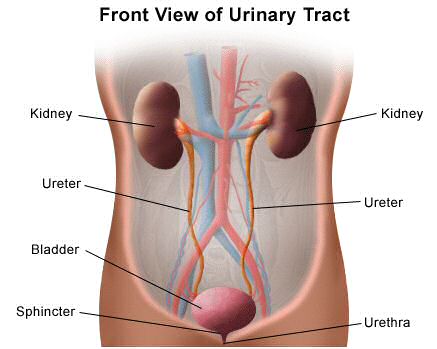
Symptoms and diagnosis of bladder cancer
The symptoms below never clearly point to bladder cancer but can also be caused by
- infections,
- benign tumors,
- bladder stones, or
- even other problems…
You need to get a proper diagnoses from an urologist if you experience one of the following symptoms:
- blood in the urine
- painful urination
- urinary urgency
- increased urinary frequency or the opposite:
- urinary incontinence
If any of the above symptoms last more than a few days, go and see your doctor!
The symptoms below could be experienced with any type of cancer including bladder cancer:
- weightloss without a reason
- being tired
- anemia
- abdominal pain
- bone pain or tenderness
Since we are talking about private parts, the first of the diagnostic methods feels quite invasive into your privacy, the others are pretty straight forward…:
- physical examination: your doctor inserts a gloved finger into your vagina, rectum, or both to feel for any lumps
- urinalysis: chemical tests done on your urine
- urine cytology: again a test done on your urine, this time looking if any cells from the inner bladder that got excreted in your urine are cancerous.
- cystoscopy: a very narrow tube with light and camera gets inserted through the urethra to examine the inside of the bladder wall up close.
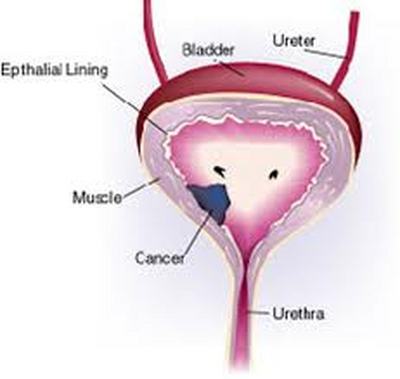
Once a cancer is suspected, doctors will perform more tests to determine if and how far the cancer has spread.
- CT scan: This technique is used to detect metastatic disease in the lungs, liver, abdomen, or pelvis, as well as to evaluate whether obstruction of the kidneys has occurred.
- Bone scan: This test involves having a tiny amount of a radioactive substance injected into your veins. A full body scan will show any areas where the cancer may have affected the bones.
Always consult your doctor if you have any problem that last ‘without any good (diagnosed) reason’ for more than 7 days.